Falling overboard is one of the leading causes of death in boating; properly fastening oneself to the vessel with the right equipment greatly reduces this risk.
HARNESSES
Safety harnesses come in a variety of forms from basic straps to a combination of life jacket-harness and wet-weather gear-harness combinations. It is worth buying the best, and to determine what works, we always examine the webbing strength, the stitching, and lastly the fit/comfort as factors in choosing harnesses. Boaters should consider the different climates involved in their cruising plans when setting out to purchase safety gear. Because we often sail offshore, we favor the inflatable vests with built-in harnesses. In our safety check we assign each crew member their personal PFD/harness (no sharing here!) and tether and then see that it is adjusted properly. The straps must always be snug and tested for clothing of different thicknesses.
TETHERS
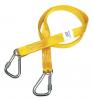
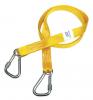
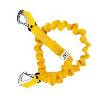
The tether must be strong and connected correctly to the harness, usually through two rings. Clips vary in quality and type and must be secure, yet still easy to undo. For this reason we prefer the double-gated Wichard Safety hooks that are easy to operate and do not open when jammed or twisted on a pad eye attachment point, as can happen with a single snap hook. When going forward, many sailors use a tether that has two attachment hooks or use two tethers with a hook at either end so they can be hooked on at all times. And in the cockpit, it is useful to have at least two pad eyes located conveniently for attaching safety harness tethers, or a short jackline for comfortable maneuverability while on watch.
JACKLINES
A jackline is strung from a ship's bow to stern to which a safety harness can be clipped, allowing a crewmember to move about the deck safely when there is risk of falling or being swept overboard. Generally the jacklines are run on both starboard and the port side of a vessel.
Jacklines may be rigged temporarily when bad weather is expected, or, especially on sailboats heading offshore, they may be left in place all the time and used as necessary. They are usually attached to strong padeye or cleat fittings at both ends of the boat, allowing the crewmember to move fore and aft by sliding their harness' clip along the line. Traditionally, jacklines were made of wire or low-stretch rope, but these can roll underfoot while working on deck. More recently, sailors are using high strength flat nylon webbing to eliminate this hazard.
Most designs for jacklines stipulate that the lines terminate well forward of the transom so that a person who goes overboard cannot be dragged behind the boat, increasing the potential for drowning. With the tether from the harness clipped into a jackline, sailors can make safe, easy maneuvers on deck in most conditions. |




 Boat Outfitting